Shoreline Property Owner Resources


Protecting Your Property. Preserving Our Lakefront.


Living along Lake Erie is one of the many benefits of calling Euclid home. However, shoreline property owners face unique challenges, including erosion, storm damage, fluctuating lake levels, bluff instability and habitat loss.


The City of Euclid is committed to helping property owners understand these challenges and explore sustainable, long-term shoreline protection strategies.


This resource center provides educational materials, restoration strategies, project examples and information to help lakefront property owners make informed decisions about protecting their property.
 

Understanding Your Shoreline


Recognizing potential problems early can help property owners make proactive decisions about shoreline maintenance and restoration.


What are the warning signs of shoreline instability?

  • New cracks in the ground near the edge of a bluff.
  • Changes in the slope or shape of the shoreline.
  • Leaning trees, fences or retaining walls.
  • Loss of vegetation or exposed tree roots.
  • Damaged seawalls or displaced protective stone.
  • Water seeping through the face of a bluff.
  • Significant soil loss following storms.
  • Settling or movement of structures near the shoreline.


Becoming a responsible shoreline steward!


Property owners can help protect the long-term health of their shoreline by maintaining appropriate vegetation, monitoring erosion, addressing drainage concerns and coordinating with neighboring property owners.


Avoid dumping yard waste, soil, construction debris or other materials along the shoreline. Consult a qualified professional before removing established vegetation, altering drainage patterns or undertaking work on a coastal bluff.


Getting Started: From Concept to Construction


Planning a shoreline restoration project can feel overwhelming. Understanding the process can help property owners move forward with greater confidence.


  1. Assess your property - Document existing shoreline conditions, erosion concerns, drainage patterns and protective structures from a safe location.
  2. Explore restoration options - Review the Nature-Based Shoreline Restoration Guide, supplemental case studies and interactive StoryMap to become familiar with potential solutions.
  3. Identify your goals- Consider property protection, long-term maintenance, habitat restoration, recreational use and your available budget.
  4. Connect with neighboring property owners - Coordinated projects may provide opportunities for more comprehensive shoreline protection and shared expenses.
  5. Seek professional guidance - Consult professionals with experience in coastal engineering, geotechnical engineering and shoreline restoration.
  6. Understand permitting requirements - Contact the appropriate local, state and federal agencies to identify required approvals before construction.
  7. Identify financing opportunities - Explore potential funding sources, collaborative financing arrangements and applicable grant programs.
  8. Implement, monitor and maintain - Develop a long-term maintenance plan and regularly evaluate the condition of your shoreline following construction.


Explore Our Shoreline Restoration Resources


Nature-Based Shoreline Restoration Guide


Explore 12 shoreline restoration measures, design principles, relative construction and maintenance costs, and guidance for taking a shoreline restoration project from concept to completion.


View the Restoration Guide (PDF)

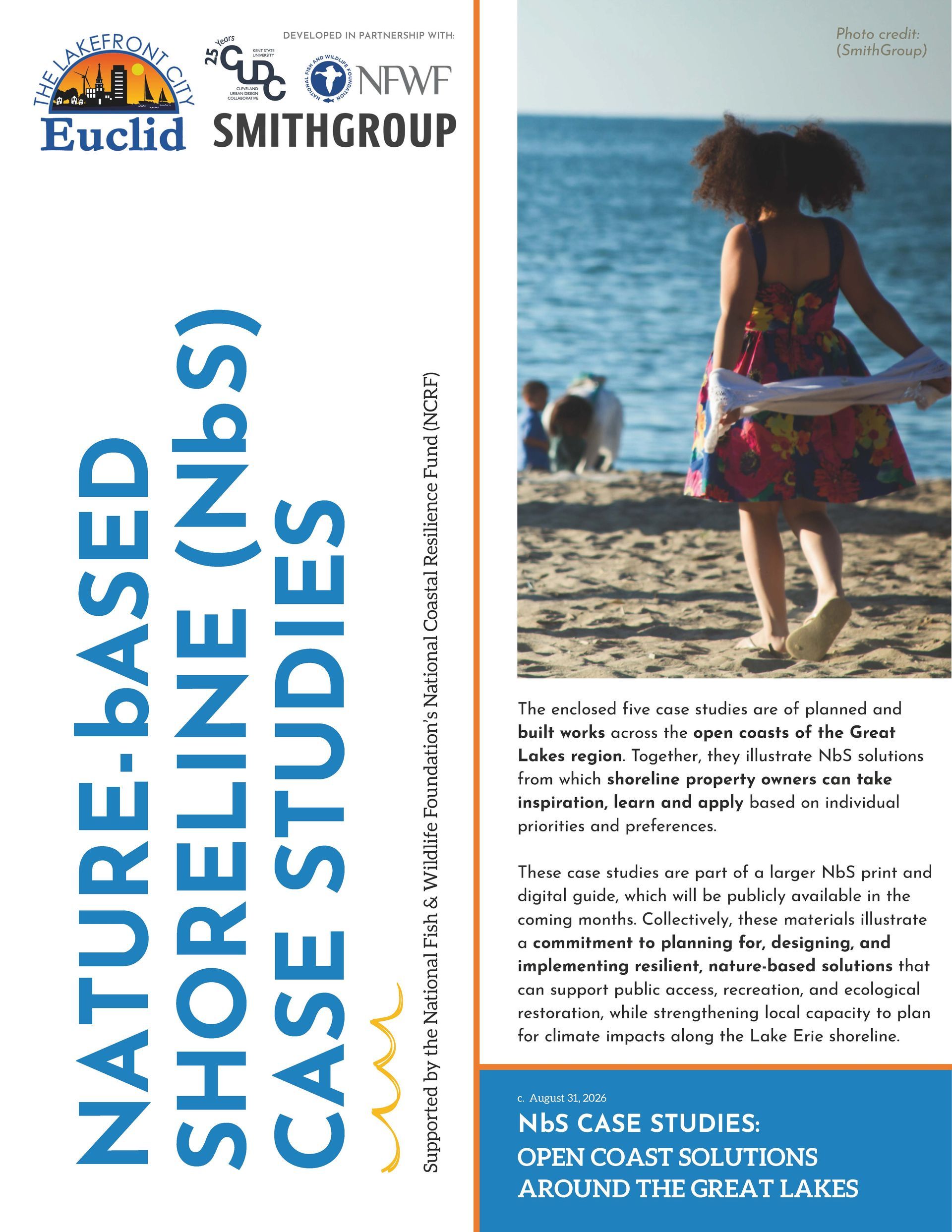
Nature-Based Shoreline Case Studies


Discover five real-world examples of planned and completed shoreline restoration projects across the Great Lakes, including Euclid's nationally recognized waterfront improvements.


View the Case Studies (PDF)


Interactive Shoreline Restoration Guide

Explore nature-based shoreline solutions through an interactive, user-friendly ArcGIS StoryMap designed to complement the restoration guide.


The Euclid Model

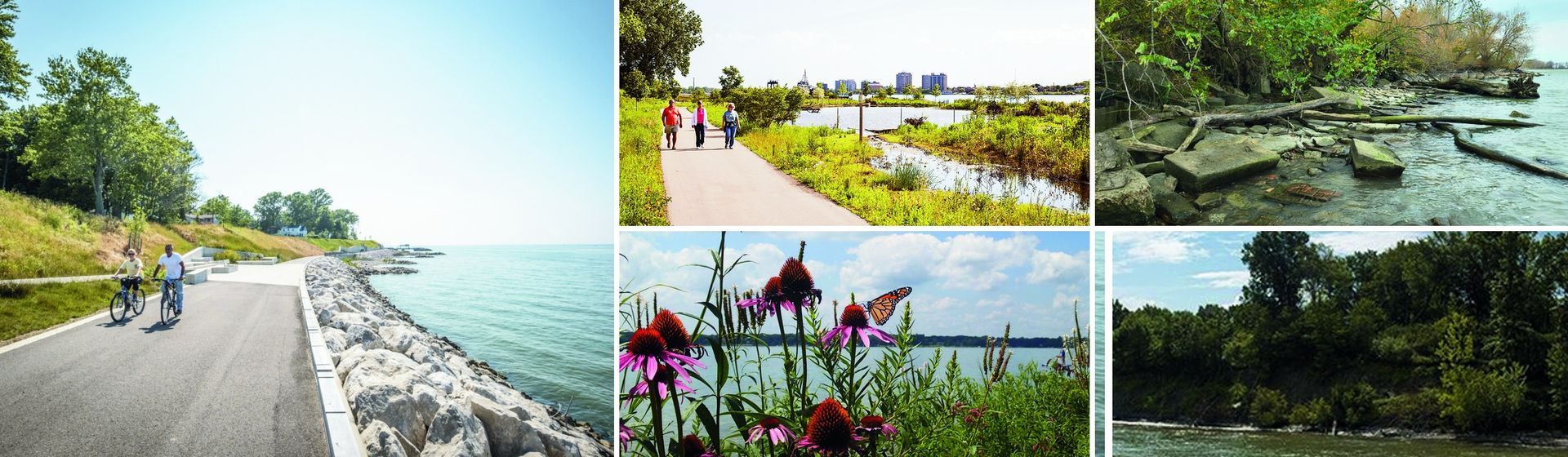
The City of Euclid has developed an award-winning, nationally recognized approach to shoreline protection and waterfront development known as The Euclid Model.


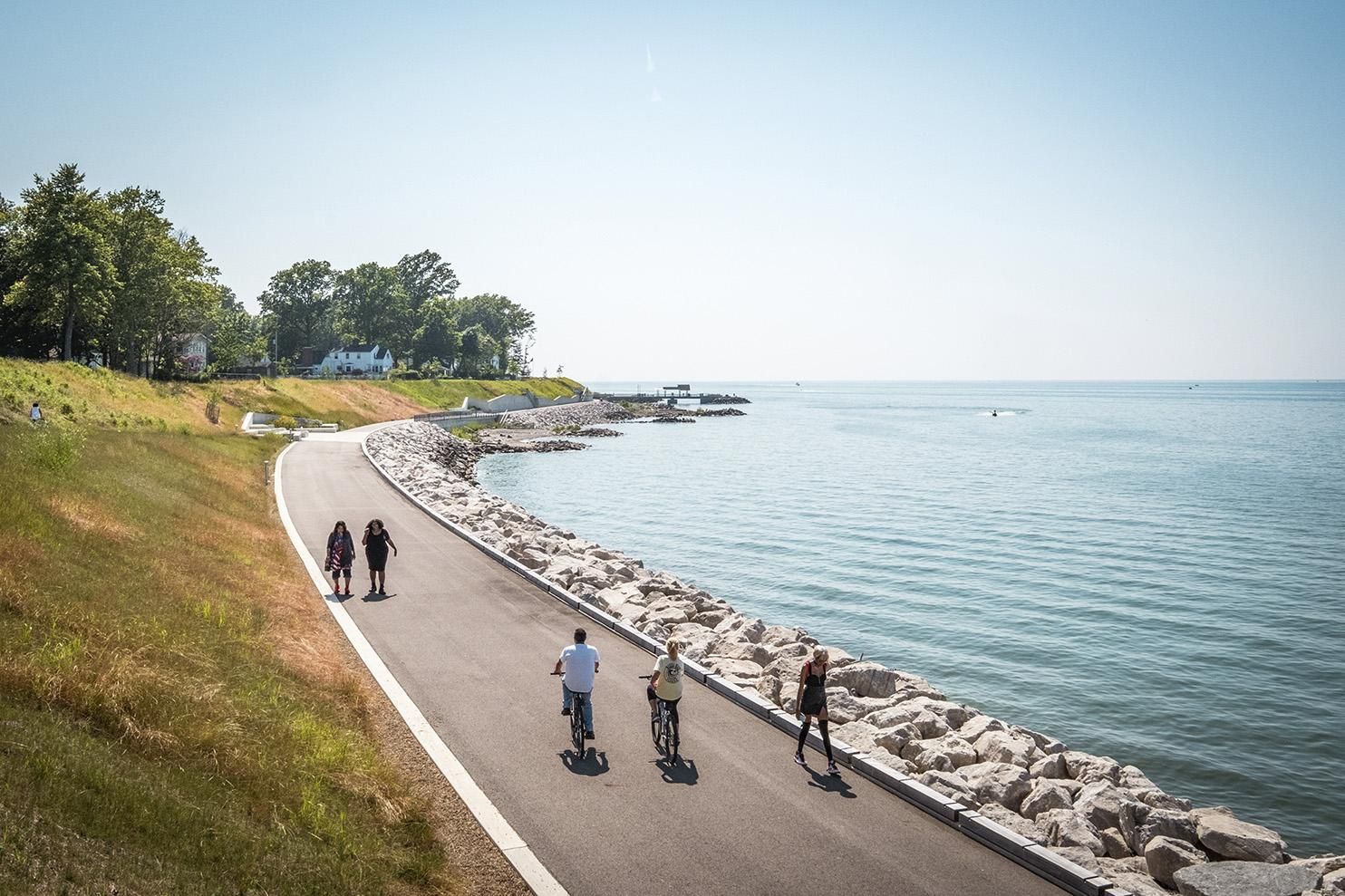
This innovative public-private initiative established long-term easements between the City and private property owners to transform three-quarters of a mile of Euclid’s Lake Erie shoreline through erosion mitigation, ecological enhancements, expanded public access to a multi-use lakefront trail and new recreational amenities.


The project serves as a model for equitable waterfront development throughout the Great Lakes region, demonstrating the benefits of collaboration between municipalities, private property owners and regional partners.


Learn more about Euclid's Waterfront Improvements


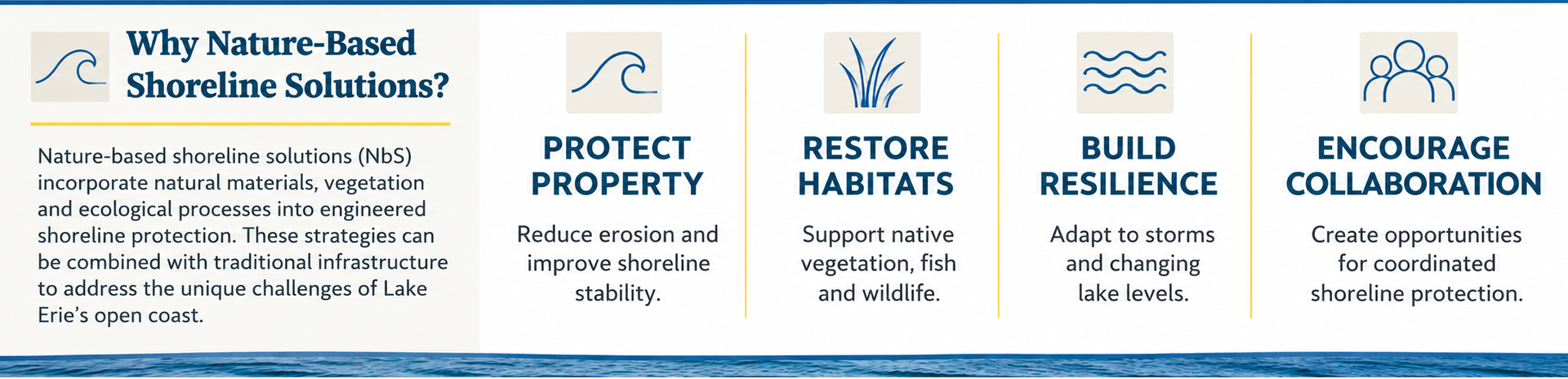
Why Nature-Based Shoreline Solutions?

Nature-based strategies use natural materials, vegetation and ecological design to help protect shorelines from erosion and storm damage.

Unlike approaches that rely exclusively on traditional hard infrastructure, nature-based strategies work with natural coastal processes to improve shoreline resilience while providing environmental benefits.


These strategies can also be incorporated into engineered shoreline protection systems, creating hybrid solutions that balance property protection with ecological restoration.

 
Additional Resources
                                                                                                                     

Organization Resource
Ohio Department of Natural Resources Office of Coastal Management
U.S. Army Corps of Engineers Federal Permitting Resources
Cuyahoga Soil & Water Conservation District Conservation Resources
Lake County Communities Shoreline SID Collaborative Shoreline Financing
National Fish & Wildlife Foundation National Coastal Resilience Fund
Ohio State University – Stone Laboratory Lake Erie Research & Education